A Place to Stand
How a tent, a tarp, and twenty acres along the Blackfoot River became the foundation of a new life.

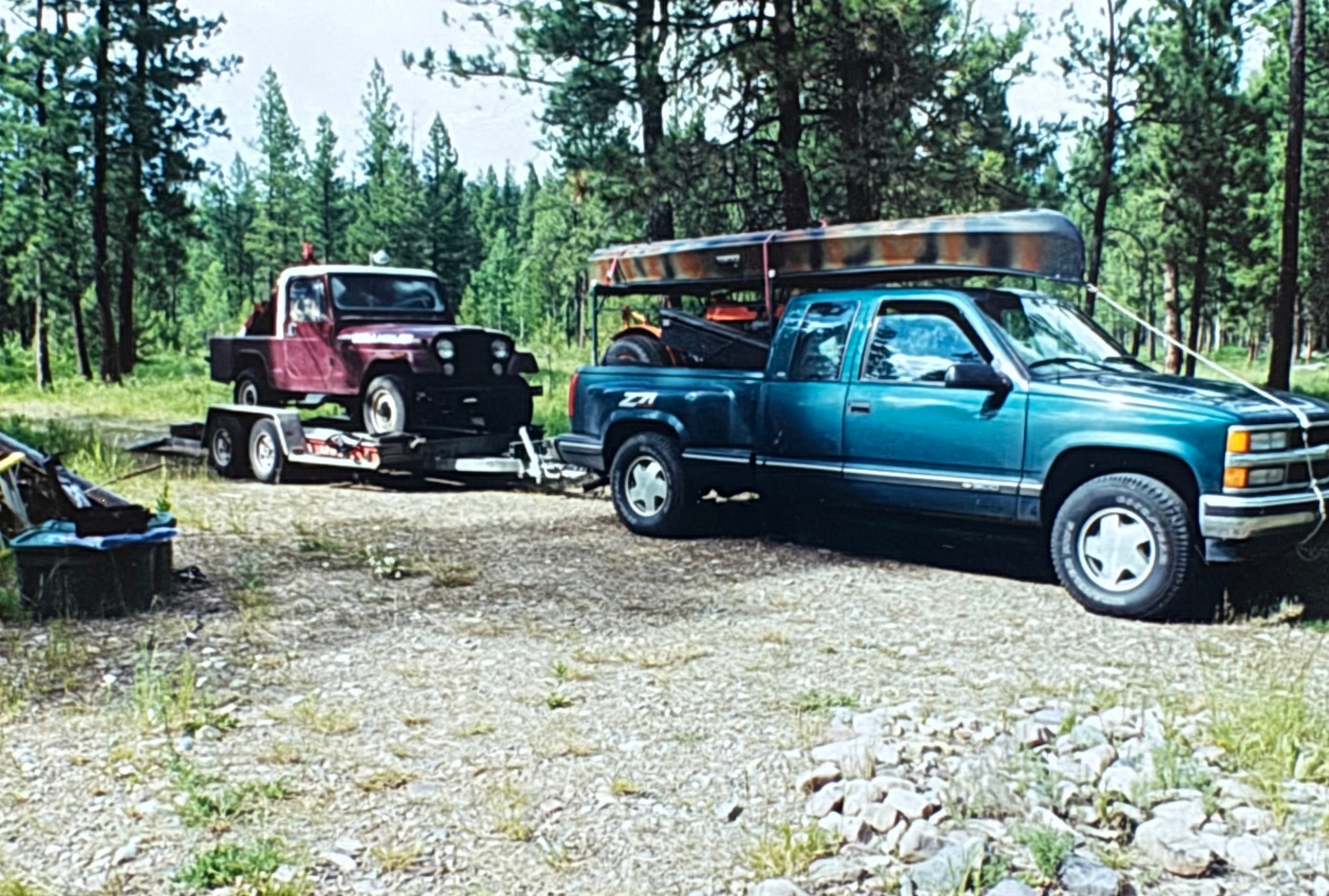
When my rig rolled into Lincoln that July, it looked like something out of The Beverly Hillbillies.
Everything I owned was either in the truck, on the truck, or behind the truck.
A Florida Gheenoe, a flat-bottom fiberglass canoe, sat upside down, ratchet-strapped above the cab and across a steel frame I’d had a welder build. An old 1985 Jeep CJ-8 Scrambler bounced along on a rented auto trailer behind me. Tools, fishing gear, camping equipment, and whatever else I thought I couldn’t live without had been crammed into every available space.
Forty-five hours earlier, I had left Florida.
Now I was standing on my twenty acres of Montana timber and Blackfoot River frontage. It was more land than I had ever owned in my life.
I had a dog, a tent, and a head full of plans.
The first home wasn’t a cabin.
It was a campsite.
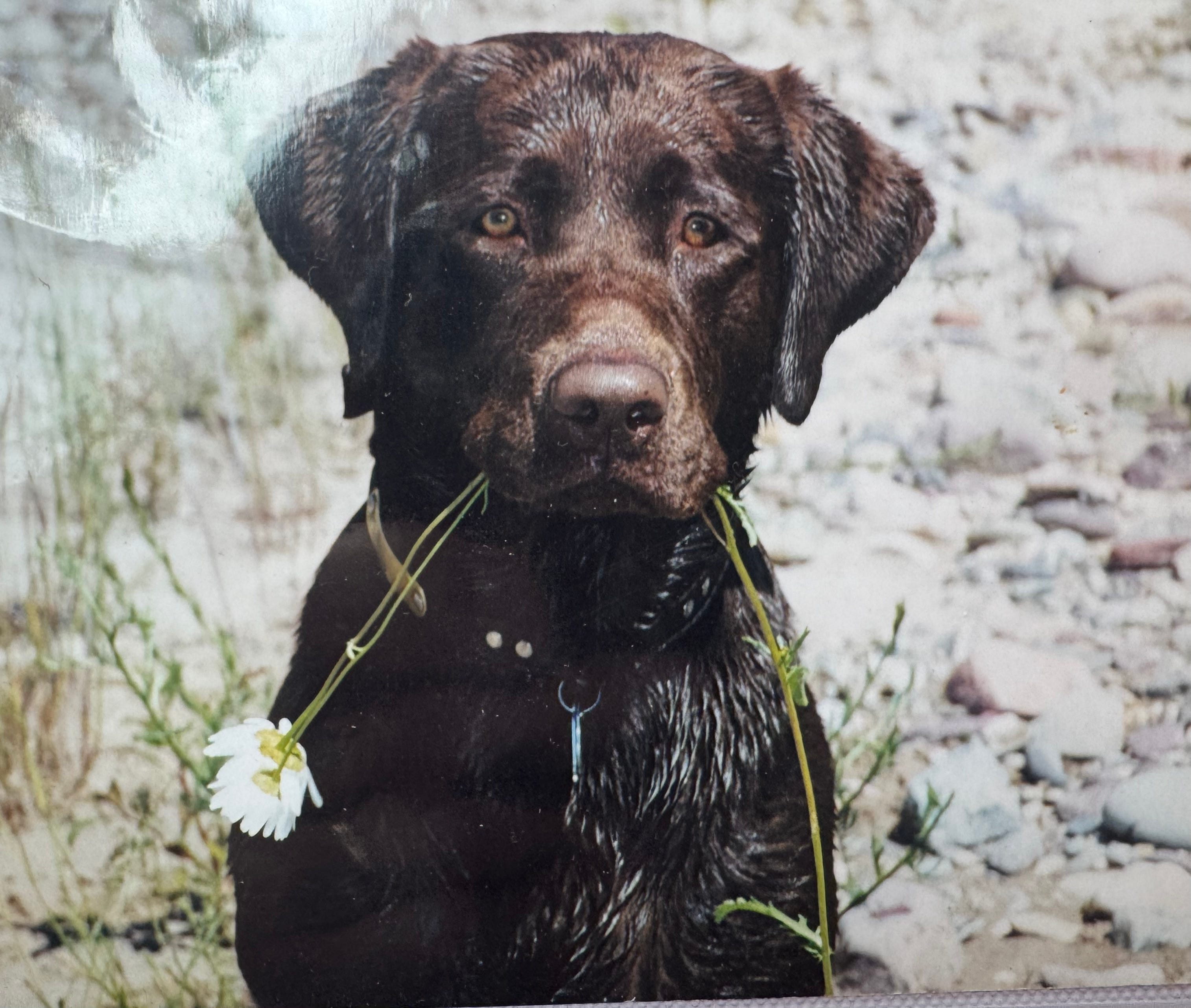
Tye figured out the arrangement long before I did. From the moment he stepped out of the truck, he seemed convinced that twenty acres of Montana timber along the Blackfoot River was about as good as life could get. A good bird dog doesn’t spend much time worrying about the things that occupy human beings. Give him clean water, something to eat, a place to sleep, and enough country to explore, and he’s generally content.
I had set up camp on a flat bench across the driveway from where the bunkhouse would eventually stand. A stand of mature ponderosa pines provided shade in the heat of the day and a little protection when afternoon thunderstorms rolled through the valley. The old, blue Coleman tent had already traveled thousands of miles before arriving in Montana. I had purchased it years earlier while wandering the West, looking for locations for Arctic Cat snowmobile commercials after somehow convincing a Minnesota snowmobile company that a filmmaker from central Florida ought to be producing their advertising campaigns. The tent wasn’t much to look at, but it was dry, dependable, and still doing its job.
The blue tarp overhead was a little more substantial than most campsite arrangements. I cut a pair of stout poles from the property and buried them in the ground. A crosspiece lashed between the uprights formed the backbone of the structure, while additional poles supported the front edge. Once the tarp was stretched tight, it created a surprisingly sturdy roof over the picnic table beneath it. The arrangement wasn’t fancy, but it stood up to wind, rain, and the occasional summer storms far better than a few ropes tied to trees and stakes driven into the ground.
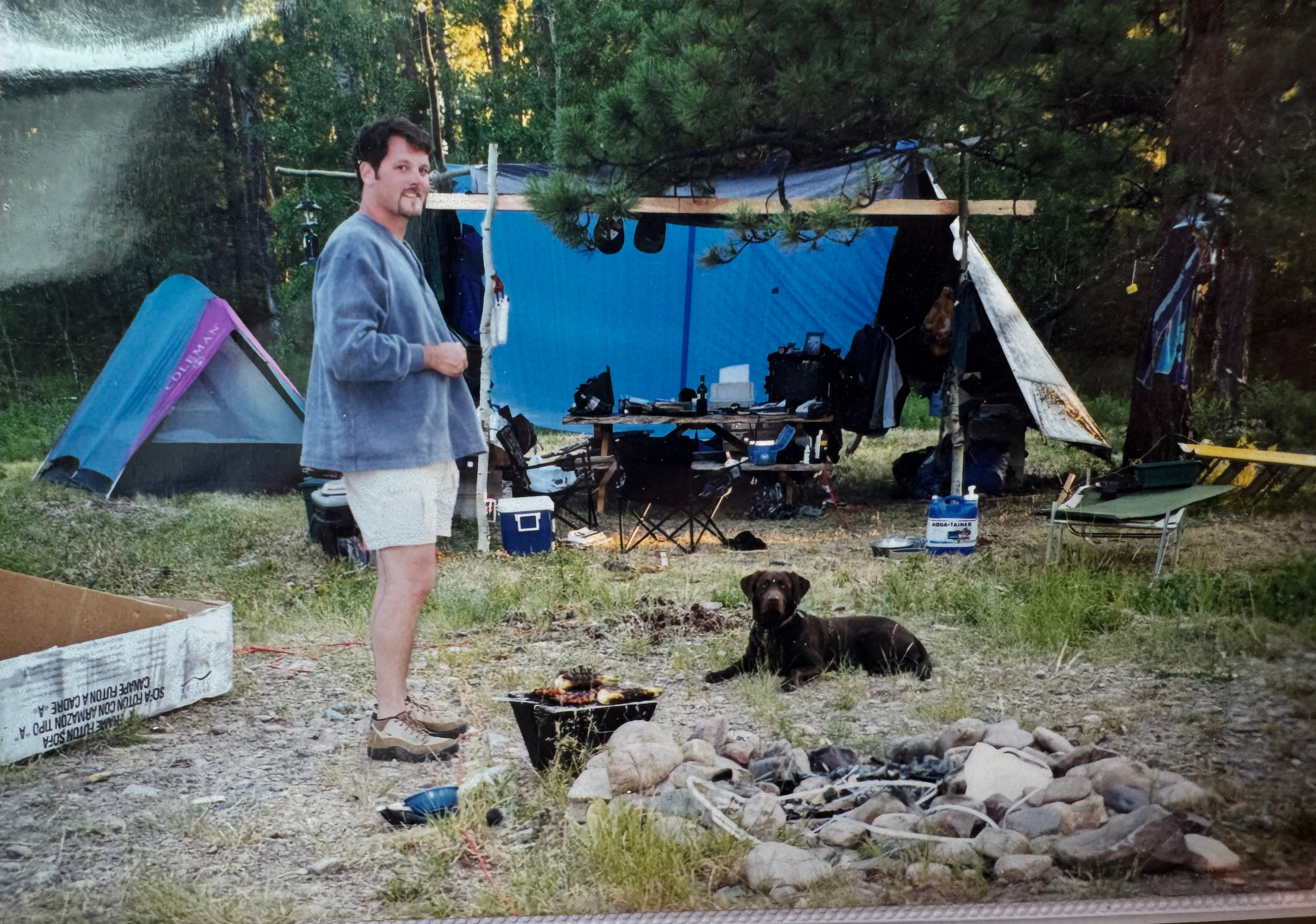
That picnic table became the center of camp. It served as my office, kitchen, dining room, and workbench. The fax machine sat there beside maps, notes, permit paperwork, and construction drawings. Coolers were tucked underneath. Lumber, tools, and building materials slowly accumulated around camp as the project began taking shape. From where I sat, I could look across the driveway toward the future building site and imagine what the property might someday become.
At the time, however, there was little to suggest a cabin would soon stand there. The building site was little more than a patch of level ground marked with stakes. What I had was a rough plan, a piece of land I could barely afford, and a long list of tasks to complete. I wasn’t there on vacation, nor was I looking for an adventure. I had come to Montana to build a permanent life, and the bunkhouse was simply the first step.
The project itself wasn’t entirely foreign to me.
Four years earlier, in 1995, I had built a house on two and a half acres outside Tampa. A local builder agreed to help me if I was willing to supervise the project day-to-day. I wasn’t swinging hammers or pouring concrete, but I learned how a house came together. Foundations came first. Then framing. Then plumbing, electrical work, insulation, and finish work. Every phase depended on the one before it, and if one piece fell behind schedule, everything behind it suffered.
The film business had taught me much the same thing.
Whether you’re producing a television commercial, a documentary, or a feature film, the fundamentals aren’t all that different. You start with a script or a blueprint. You build a budget. You create a schedule. Then you spend every day solving problems and making sure the right people arrive at the right place at the right time. A storyboard isn’t much different than a set of plans. A production schedule isn’t much different than a construction schedule. Camera crews, lighting crews, art departments, and talent all have to arrive in sequence for the same reason concrete crews, framers, plumbers, and electricians do. If one piece falls apart, the entire project begins to wobble.
What I didn’t know was how to physically build much of it myself.
Florida was full of subcontractors. If you needed a plumber, there were dozens of plumbers. If you needed a roofer, there were dozens to choose from. Need drywall? Somebody could start next week. Need concrete? There was another company down the road.
Lincoln wasn’t like that.
Most of the people I was meeting seemed to wear three or four different hats. The builder might own another business in town. The excavation contractor might spend the following week putting up hay. The guy selling building supplies might also be building houses. Building a house often took years as a builder and his single employee would build every facet of the home from foundation to finish work and everything in between. People weren’t waiting around for somebody else to solve problems. More often than not, they figured things out themselves.
That appealed to me.
Fortunately, I had a friend who understood construction far better than I did.
Erick West and I went all the way back to kindergarten. We grew up together, survived middle school together, and eventually graduated from high school together. While I found my way into the film business, Erik found his way into construction. By the time I was standing on twenty acres along the Blackfoot River, trying to figure out where to begin, he was living in North Carolina and building custom homes.
Nearly every day, the fax machine sitting on that picnic table beneath the tarp would come to life.
This was long before YouTube.
Long before FaceTime.
Long before anyone could take a photograph with a phone and send it across the country in seconds.
If I had a question, I would pick up the landline and call Erick. I described the problem as best I could. A little while later, the fax machine would begin spitting out hand-drawn sketches, measurements, diagrams, and instructions. Sometimes it was a detail showing how something should be framed. Other times, it was a reminder that if the foundation wasn’t square, nothing built on top of it would be either.
Looking back, I don’t think there was a single major step in that project that didn’t involve a phone call to Erik.
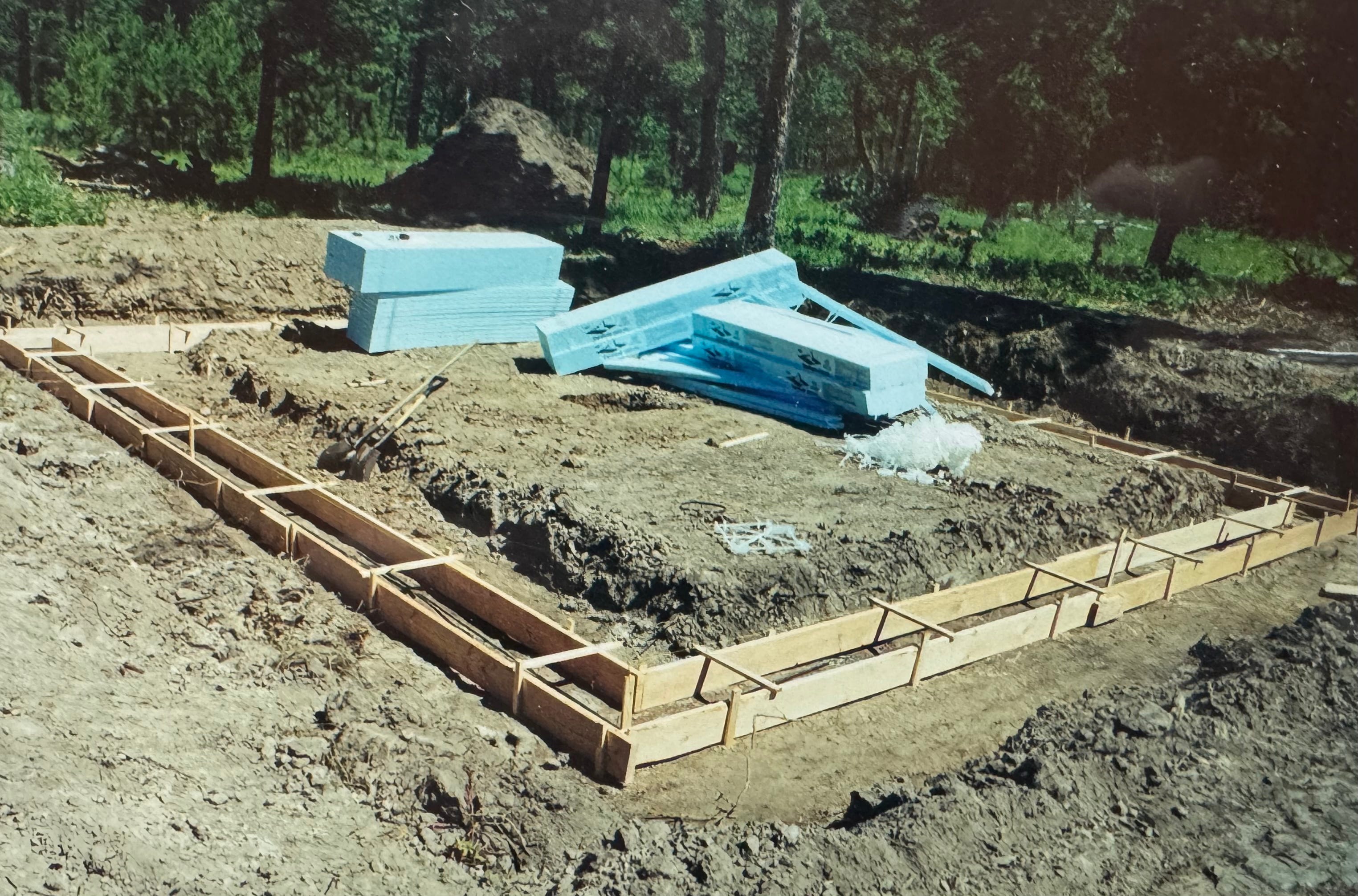
The first lesson was how to lay out a foundation.
Once the corners were staked and the measurements checked and rechecked, it became obvious I needed somebody with a backhoe.
Everyone I talked to pointed me toward the same man.
His name was Mark Smith.
By the time I was ready to build the bunkhouse, Mark and I already knew one another.
Earlier that spring, after the county approved my subdivision of the original thirty-acre parcel and split off ten acres along the county road, the commissioners attached a long list of conditions to the approval. Chief among them was a requirement that I construct a county-specification access road from the existing subdivision road to the county road. Basically, a road to nowhere. Mark had been the one I hired to build it.
The requirement never made much sense to me. The existing subdivision road was little more than a narrow gravel lane, and the county road it connected to was only about eighteen feet wide in places. Yet I was required to build roughly 440 feet of 24-foot-wide road, complete with ditches, culverts, drainage improvements, and all the other specifications typically associated with county construction standards. Looking back, I’m almost surprised they didn’t require pavement.
To Mark’s credit, he built it exactly as the county wanted. The road passed inspection without issue. While I spent plenty of time questioning the logic of the requirement, Mark never did. He wasn’t the kind of man to waste energy arguing over decisions already made. He simply showed up, climbed into the machine, and went to work.
That was Mark.
He had a reputation throughout the valley for being honest, straightforward, and exceptionally skilled with a backhoe. Nobody described him as flashy. Nobody described him as a salesman. People said that if Mark told you something, you could generally take it to the bank.
That was recommendation enough for me.
So when it came time to build the bunkhouse, hiring Mark again was an easy decision.
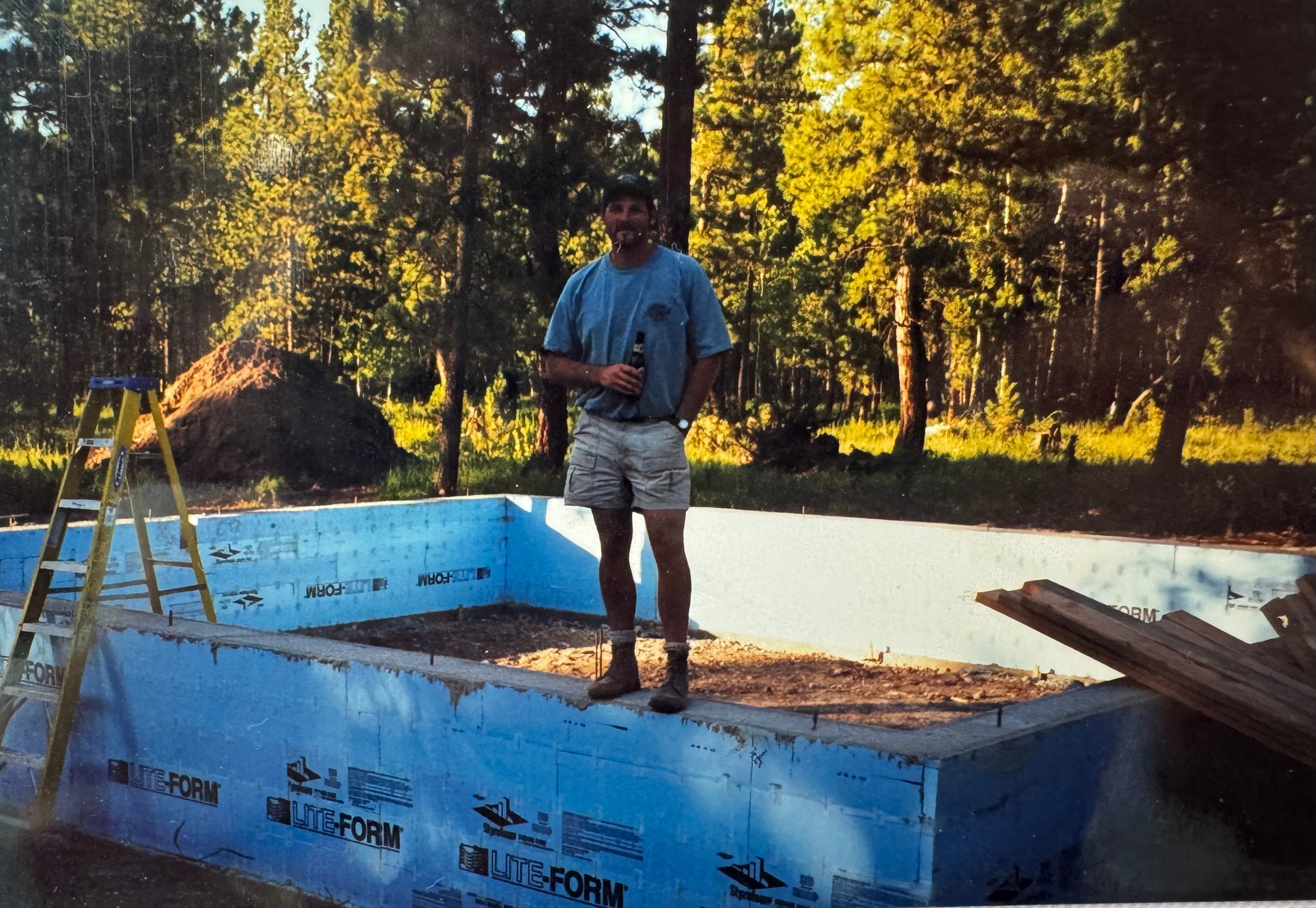
One morning, he came rumbling up the driveway in a dump truck, pulling a backhoe rattling behind on a trailer. By then, I had already laid out the building site. More than once, Erick had patiently explained how to measure the diagonals to ensure the foundation was actually square, not merely close enough to fool me.
I must have checked those measurements half a dozen times.
Maybe more.
When Mark climbed out of the truck, I was pretty confident I had it right.
He walked over to the stakes marking the corners of the future bunkhouse and stood there for a minute, looking things over. Then he pulled out a tape measure and checked a few dimensions himself.
I remember waiting for him to tell me everything was wrong.
Instead, he nodded.
“Looks good.”
That was all I needed to hear.
A few minutes later, he climbed into the backhoe and lowered the bucket into the Montana soil.
Until that moment, the bunkhouse had existed mostly in my imagination. But when the first bucket of dirt curled out of the excavation and landed beside the hole, the project suddenly became more than an idea.
For the first time, I could actually see where the walls would stand.
The months that followed passed in a blur of sawdust, concrete, and learning curves.
The foundation took shape. Concrete was poured. More lumber arrived. Erik continued faxing sketches and instructions from North Carolina whenever I found a new way to confuse myself. Every day seemed to bring another lesson, another problem to solve, and another reason to pick up the phone.
What I remember most, however, is not the construction.
I remember the people.
Somewhere along the way, word spread that the fellow from Florida was serious about building a place on the Blackfoot. People I barely knew began stopping by. Some offered advice. Some offered tools. Some simply wanted to see how things were progressing. Before long, when it came time to raise walls and set trusses, people started showing up to help.
Nobody sent invitations.
Nobody organized a committee.
They just came.
One man held a wall while another checked it for plumb. Someone else drove nails. Someone climbed a ladder. Someone handed up tools. Tye moved through the activity as if he had appointed himself the job superintendent. Sometimes, good bird dogs simply know that the world revolves around them.
By the end of the day, walls that had been lying flat on the ground stood tall against the backdrop of the ponderosa pines that shaded the building site.
It had the feel of an old barn raising, though no one would have called it that.
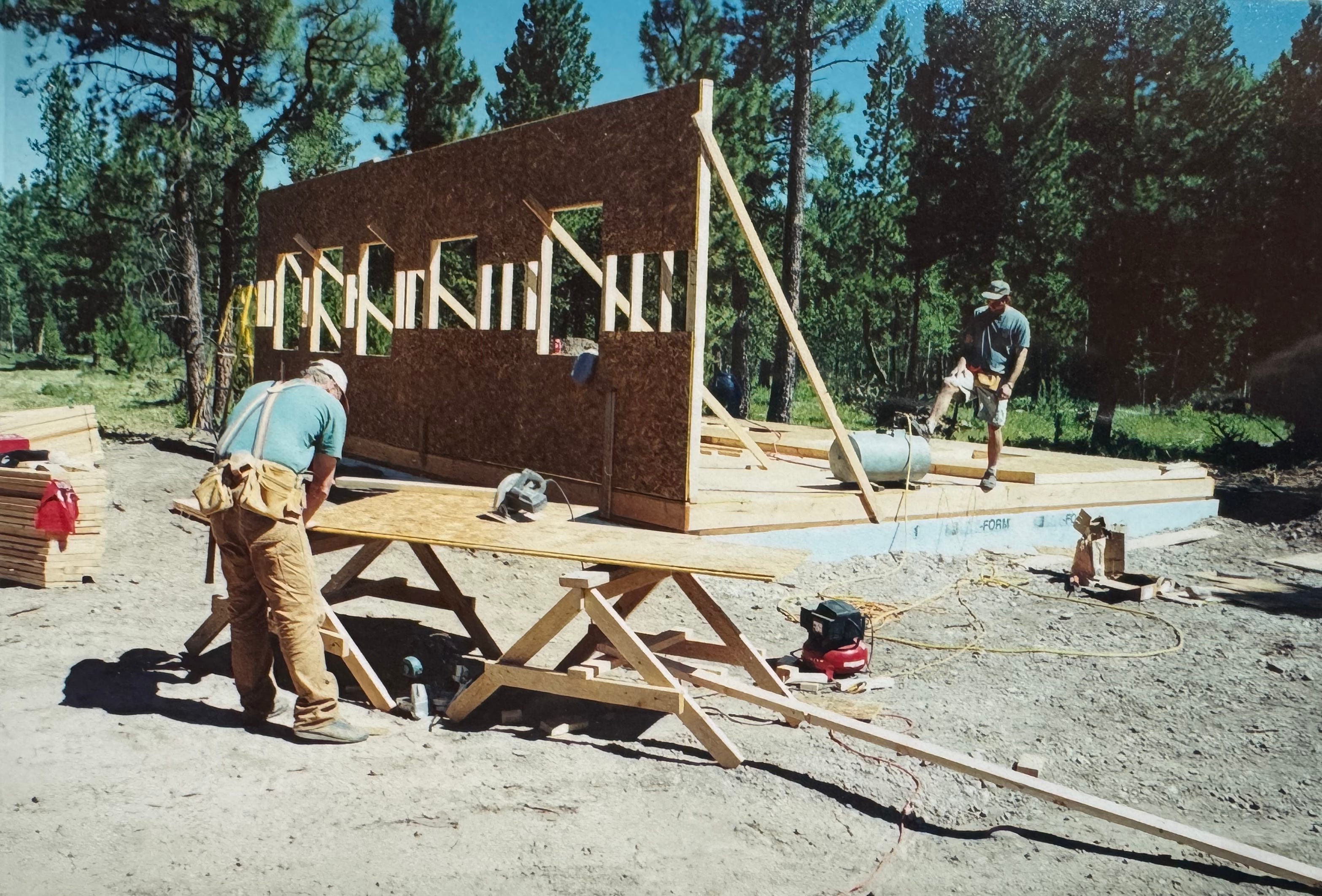
The work was practical and matter-of-fact. Montana people did not need speeches about community. They simply showed it by arriving with a hammer, a ladder, a strong back, or enough experience to keep a young man from making a mistake that would cost him money he did not have.
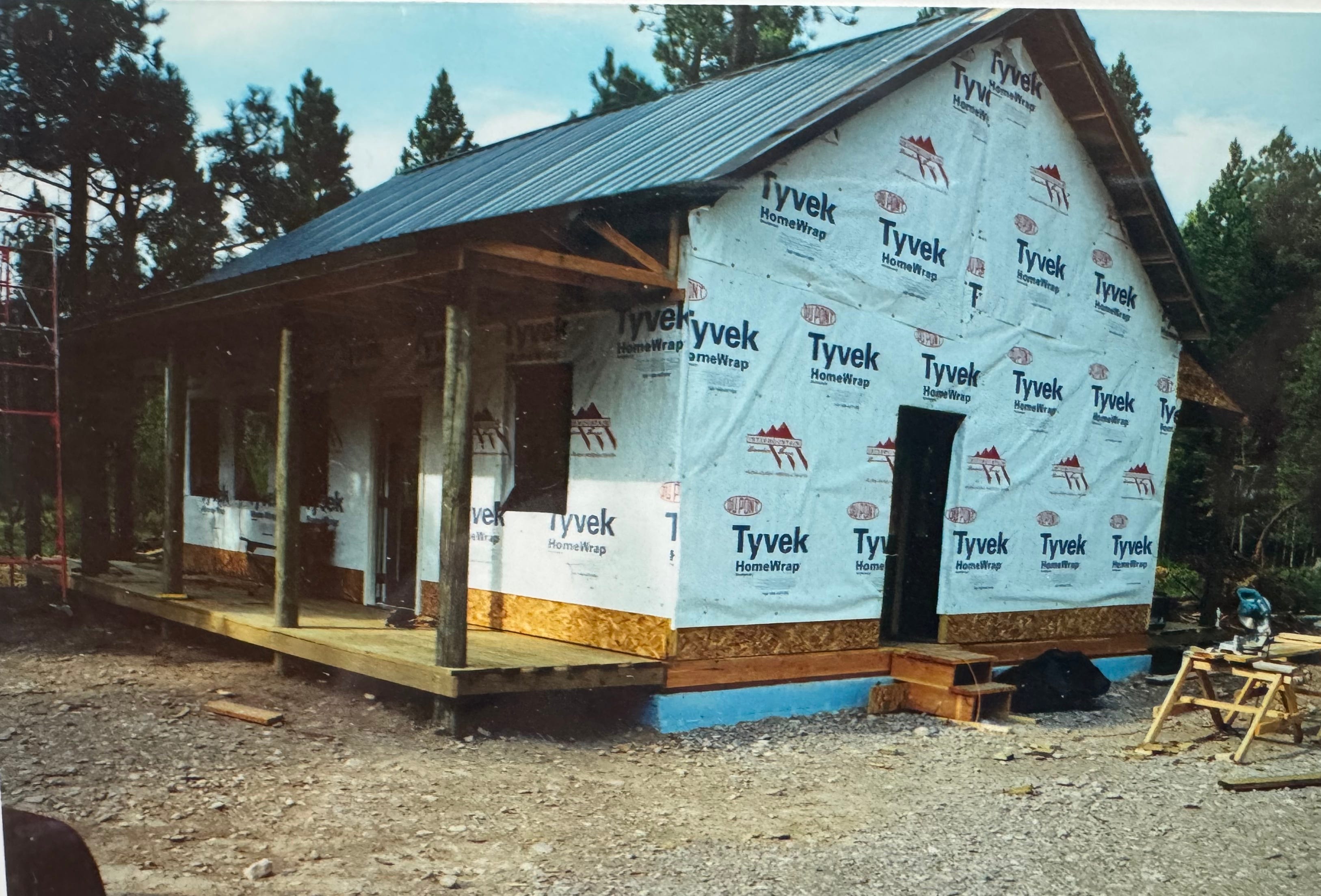
Within a short time, the trusses were up, and the roof was decked. The bunkhouse had taken shape, visible down the driveway. It was still raw lumber and plywood. The windows had not yet been installed. The interior was nothing more than open framing and possibility. But for the first time, the place resembled a home rather than a construction project.
In Florida, I had known subcontractors.
In Lincoln, I was getting to know neighbors.
There is a difference.
One relationship is transactional. The other is built on shared experience, mutual respect, and the understanding that the favor may need to be returned someday.
I was beginning to understand why people stayed in places like Lincoln for generations.
The mountains were certainly part of it. The river was part of it. The hunting and fishing helped. But what I was discovering, board by board and nail by nail, was that a place’s real strength comes from the people who call it home.
The bunkhouse gave me a reason to meet them. The work gave us something to do together. Looking back, I sometimes think the building itself was only part of what was being constructed that summer.
The walls went up, the roof went on, and a bunkhouse took shape beside the Blackfoot. But something less visible was taking shape as well—a connection to the place and to the people who had quietly helped make it possible.
Once the doors, windows, and roof were in place, I moved in.
Most reasonable people probably would have waited until the interior was finished.
I wasn’t that patient.
After months of sleeping in a tent, the idea of four walls and a roof overhead seemed luxurious. The drywall wasn’t up, and much of the interior framing was still exposed. Tools were scattered everywhere, and there were more unfinished projects than completed ones. But it was dry, and for the first time since arriving in Montana, I could shut a door behind me at night.
The campsite remained operational.
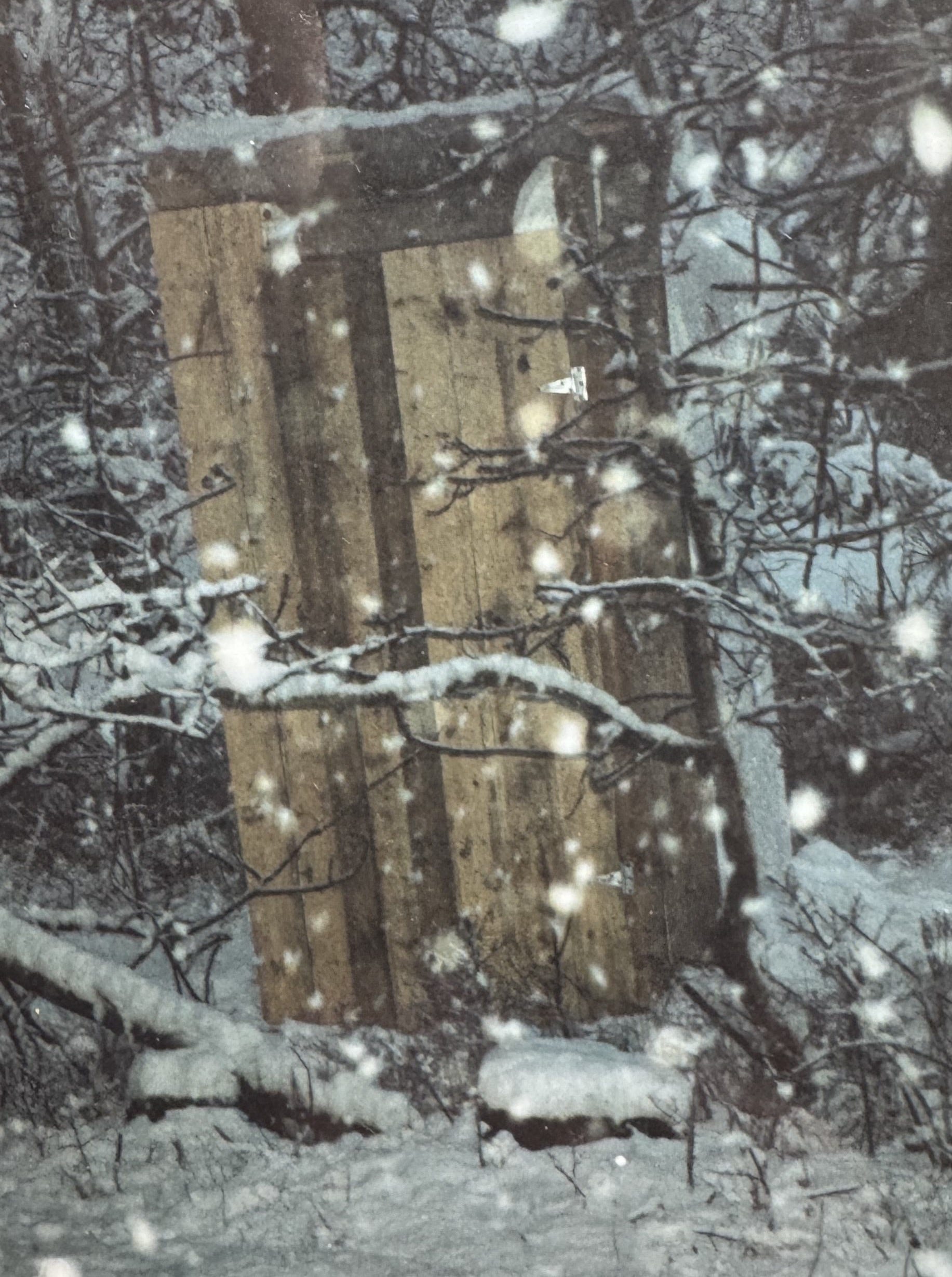
The outhouse was still doing most of the heavy lifting. The septic system wasn’t finished, so indoor plumbing remained more theory than reality. Water came from a hose. The shower was still the same solar-heated camp shower I had used all summer.
By then, I had improved the process somewhat.
The shower bag would sit in the sun all day, soaking up whatever warmth a Montana summer offered. In the evening, I would hang it above the small fiberglass shower stall I had installed in the bunkhouse bathroom. The water wasn’t exactly hot, but it was usually warm enough to convince me I was civilized.
Usually.
The fax machine stayed on the picnic table under the blue tarp. Looking back, that setup probably sounds absurd to anyone under 40. Today, you can carry the sum of human knowledge in your pocket. Back then, if I needed construction advice from North Carolina, I waited for the fax machine to spit out another hand-drawn sketch from Erik.
Piece by piece, the bunkhouse became more functional. I found cabinets. I found a stove. A bed frame, box springs, and a used mattress followed me home from a garage sale somewhere in Lincoln. The mattress passed the most important test: it didn’t appear to have too many mysterious stains.
Someone always seemed to know someone who had something for sale, and before long, the bunkhouse began filling with the accumulated odds and ends that slowly turn a building into a home.
My favorite part was the blue-stain pine tongue-and-groove ceiling. Dead-standing lodgepole pine infected by a harmless fungus develops streaks of blue, gray, and silver through the grain. Once the boards were installed and the vaulted ceiling began taking shape beneath the scissor trusses, the little bunkhouse suddenly felt much larger than its actual dimensions.
It wasn’t fancy.
But it was mine.
——
The first real test of my commitment to Montana arrived that fall.
My father called and asked if I could help him with a corporate group-hosted trip in Alaska.
For decades, he was among the most recognized outdoor journalists in America. As outdoor editor of the Detroit Free Press, he held a unique position during an era when Detroit was still the undisputed center of the American automobile industry. Back then, if you were a CEO, senior executive, advertising executive, or automobile dealer who enjoyed hunting, fishing, or outdoor adventure, there was a good chance you knew Tom Opre—my old man.
Over the years, a number of automotive manufacturers and suppliers began asking him to organize and host incentive trips for their top dealers and executives. These weren’t ordinary vacations. They were experiences most people only read about in magazines—African safaris, wilderness hunts, remote fishing trips, and adventures in places most Americans never see.
This particular trip was headed to the Alaska Peninsula in search of Alaskan brown bears.
My job wasn’t about guiding or hunting. It was about making sure clients arrived where they were supposed to, coordinating logistics, and solving problems before they became bigger issues. In many ways, it wasn’t all that different from producing a film.
Most of the clients eventually arrived, settled into camp, and headed into the field.
These were all-expense-paid trips funded by automobile manufacturers to reward their top-performing dealers. The dealers didn’t pay for the hunts themselves. The corporation paid for everything—airfare, lodging, guides, food, and transportation — even gratuities.
One dealer, however, never made the trip.
Nobody thought much about it at first.
As the days passed, one after another, the remaining dealers found success and headed home. By the end of the trip, only a handful of us remained in Cold Bay waiting for the final departures and flights south.
My father was guiding and hosting another group several hundred miles away in Sand Point with legendary Alaska master guide Larry Rivers.
That was when he called. I told him about the missing car dealer.
“Do you have six hundred dollars on you?” he asked.
Six hundred dollars was the cost of a nonresident brown bear license in Alaska that year.
I told him I did.
“Ask Rich if he’ll let you hunt.”
Rich Guthrie was the outfitter overseeing the camp where I was working. Most of my responsibilities had been completed, and several days remained before I was scheduled to head home.
When I asked him about it, he thought for a moment and shrugged.
“Sure.”
Just like that, I went from coordinating clients to becoming one.
A few days later, I found myself in a Super Cub airplane headed to a remote camp along a gravel-bar airstrip.
The country seemed impossibly vast. Rivers braided across broad valleys that stretched toward distant mountains already dusted with snow. The air carried the scent of salmon and saltwater. Every gravel bar seemed capable of hiding a brown bear. Every patch of willow and alder seemed alive with possibility.
Rich eventually flew me into a small spike camp in the middle of the Joshua Green River, where two guides were already set up on a brush-covered island. The island was a tangle of alder thickets, driftwood, and game trails worn deep into the earth by generations of bears traveling between the river and the surrounding hills.
To get there, Rich landed his two-seater airplane equipped with tundra tires on a narrow sandbar that couldn’t have been more than one hundred and fifty feet long. At high tide, much of it disappeared beneath the water. Looking around, it was hard not to wonder whether landing there was the easy part.
The river was our highway, our source of drinking water, and the center of everything around us. Salmon moved upstream in steady waves. Gulls circled overhead. Bear tracks pressed into nearly every patch of soft ground. The guides boiled river water for drinking and cooking, and nobody gave it much thought. We were far more concerned about bears than about microscopic organisms.
A few weeks earlier, on the flight into Cold Bay, I found myself seated next to the assistant manager of the Izembek National Wildlife Refuge. At some point in the conversation, he mentioned that aerial surveys conducted before the season had counted two hundred and ninety-eight brown bears in the Joshua Green drainage.
At the time, it sounded like an impressive statistic.
A few days later, standing beside the river, looking at claws and bear tracks pressed into nearly every mud bar and game trail disappearing into the alders, it sounded more like an understatement.
The days passed quietly. We glassed the hillsides, walked the riverbanks, and sat for long stretches, watching a landscape that seemed older and wilder than almost anything left in North America.
I was fortunate enough to take a mature brown bear.
Like most visitors to Alaska, I assumed the brown bear would be the only thing I brought home with me.
I was wrong.
A few days later, I boarded a plane headed back to Montana. At the time, I felt fine.
By the time I returned to Lincoln, winter was already knocking on the door. At fifty-five hundred feet, the mountains rarely pay much attention to the calendar. Snow already covered portions of the surrounding ridges. Frost coated the grass most mornings. The sun disappeared earlier each day behind the timbered slopes above the Blackfoot.
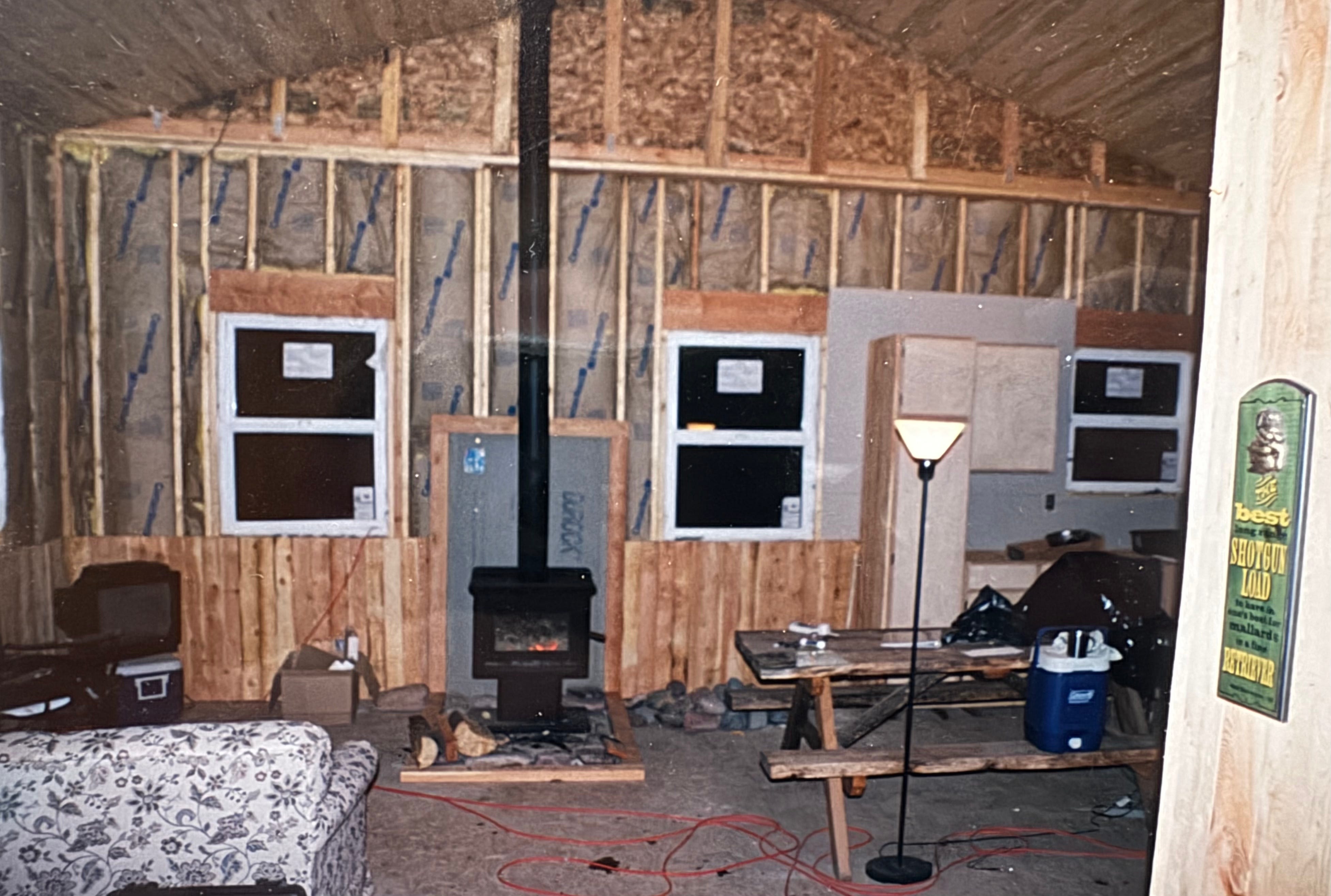
The bunkhouse was still far from finished. The septic system wasn’t operational yet. The outhouse remained an important part of daily life. Water still came from a hose. The walls inside were largely exposed framing. Tools seemed to occupy every available horizontal surface.
For the first day or two, everything seemed normal.
Then something changed.
At first, I thought it was a stomach bug. A day later, I knew better. By the second day, I was making so many trips to the outhouse that I began calculating whether it was worth walking all the way back to the bunkhouse between visits.
The answer was often no.
What I remember most wasn’t the running.
It was the pain.
I had found an old couch at a garage sale somewhere in Lincoln. It sat against one wall of the unfinished bunkhouse next to exposed walls and dangling electrical wire. For hours at a time, I would curl up on that couch in the fetal position while waves of pain rolled through my gut.
The cramps were unlike anything I had ever experienced. I would lie there sweating, gripping the cushions, waiting for the next wave to pass. Then another would arrive. And another.
Tye stayed close.
Most of the time, he lay on the floor a few feet away, watching me. Occasionally, he’d lift his head when I groaned, studying me with those amber Labrador eyes as if he were trying to understand what had gone wrong. Then he’d lay his head back down and continue keeping watch.
Good bird dogs don’t ask questions.
They just stay with you.
Between the couch and the outhouse, two days blurred together. The route from the front door to that little wooden throne quickly became one of the most familiar paths on the property. The novelty wore off surprisingly fast.
Two days later, I drove to the medical clinic in Lincoln. The nurse practitioner listened patiently as I explained the trip, the river water, the pain, and the fact that I couldn’t keep so much as a tablespoon of water in my system for more than a minute or two.
Then he reached for a medical reference book thicker than a phone book and began turning pages.
Normally, I appreciate thoroughness. At that moment, I was less interested in research.
“Dude,” I finally said, “I have Giardia. Just give me the medicine to kill it.”
He looked up from the book.
Turns out I was right.
The medicine finally did its job. I could keep water down again. The pain began to fade. The trips to the outhouse became less frequent. Life slowly started returning to normal. Or at least whatever passed for normal in a half-finished bunkhouse beside the Blackfoot River.
Looking back now, the whole thing seems slightly ridiculous.
A little more than a year earlier, I had been living in Florida, producing television commercials, traveling constantly, and worrying about deadlines, clients, and production schedules.
Now I was heating water for showers, sleeping on a garage-sale mattress of questionable history, battling intestinal parasites, and trying to finish a cabin in western Montana before winter arrived.
And yet I don’t remember feeling miserable.
I remember feeling fortunate.
The bunkhouse wasn’t finished.
My future wasn’t entirely clear.
But every morning when I stepped outside and looked across the river valley, I knew something I hadn’t known for a very long time.
I wasn’t searching anymore.
I was home.
###
What a remarkable “adventure” into The Black River homestead you created.