Nine Hundred Dollars
How nine hundred dollars, a production office, and a hard lesson in endurance opened the first real door into my life in film.

I left home with nine hundred dollars in my pocket.
That was all I had. A GMC S-15 pickup truck with a cap on the back, all my worldly possessions stuffed behind the seat, road maps folded across the dashboard and just enough money to keep moving south if nothing went wrong. I wasn’t chasing Hollywood. At that age I honestly didn’t even know exactly what I was chasing. I only knew I wanted to build things with cameras and stories the same way the men around my father had built careers with typewriters, bird dogs and experience gathered the hard way.
I drove south until I finally reached Interstate 95 along the Eastern Seaboard. In Boone, North Carolina I stopped to visit my father’s old friend Larry Hand, the former Detroit Lions defensive lineman who had moved back home after professional football. Growing up, Larry always seemed larger than life to me. One of those men from my father’s orbit who carried confidence and physical presence into every room they entered without ever needing to announce themselves.
Then I kept driving through the Carolinas, through Georgia and eventually into Florida. The farther south I traveled, the farther Michigan disappeared in the rearview mirror. Most nights I camped out somewhere cheap or simply slept in the truck. I spent my first night in Florida inside Ocala National Forest beneath towering longleaf pines and humid air so thick it barely seemed to move beneath the Spanish moss hanging from the trees.
I was heading toward filmmaker Glenn Lau.
But long before Glenn became one of the most influential outdoor filmmakers in America, he had first built a reputation as a fishing guide on Lake Erie back when parts of the lake were so polluted people openly called it the Dead Sea. Glenn’s guiding motto was simple: “No fish, no pay.” And according to the men who knew him back then, not one client ever left without paying because Glenn always found fish.
Fishing was what first brought my father and Glenn together years earlier. My dad had written a handful of articles in the Detroit Free Press about Glenn’s guiding exploits. The two worked together on a 16mm outdoor film back in the early 1970s when the outdoor television world was still small enough that many of the major personalities knew one another personally through fishing camps, hunting lodges, magazine assignments and film productions. Glenn had even played with me on the living room floor when I was a youngster long before I ever understood who he was or what he would eventually mean in my own life.
By the time I arrived in Florida, Glenn already carried legendary status in the outdoor world. He had worked on The American Sportsman, produced programming for Sports Afield Television and Coors Western Outdoorsman, and had become widely respected for revolutionizing underwater fishing cinematography. His landmark documentary Bigmouth, narrated by Rod Serling from The Twilight Zone, changed how fishermen thought about largemouth bass behavior and underwater filming itself.
Glenn’s underwater footage looked unlike anything people had seen before. Bass striking lures — underwater. Spawning behavior. Fish movement. Feeding patterns. Entire underwater worlds most fishermen had never imagined suddenly appeared on television screens and in film auditoriums around the country. His fishing commercials and films won major international advertising awards, including a Cannes Golden Lion, long before most outdoor filmmakers were even thinking cinematically about fish behavior or underwater storytelling.
Glenn’s world revolved around cameras, bass fishing, underwater filmmaking and the growing explosion of outdoor television during the 1970s and 1980s. He ran with many of the early legends of professional bass fishing and outdoor television — Roland Martin, Hank Parker, Ray Scott, Forrest Wood of Ranger Boats, Grits Gresham and Homer Circle.
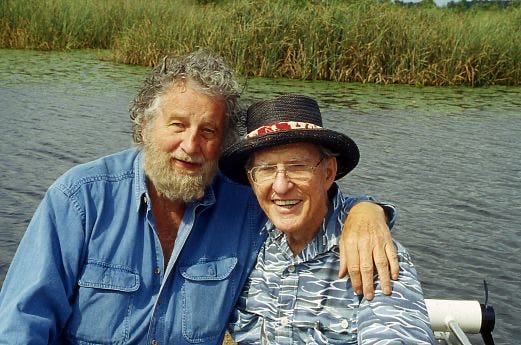
Homer was one of the giants of early American fishing television and outdoor journalism. Before ESPN, before YouTube and before fishing exploded into corporate tournament culture, Homer Circle had already become a nationally recognized fishing personality through magazine writing, television appearances and decades spent teaching ordinary Americans how to fish. Millions of fishermen knew him simply as “Uncle Homer.” He carried that rare ability to make people feel comfortable and welcomed into the outdoors instead of talked down to by experts.
Glenn and Homer became extremely close friends. Long after both men had already become legends in the outdoor world, they still went fishing together one morning every single week until the day Homer died.
That world overlapped constantly with racing, hunting, television and outdoor celebrity culture back then. Dale Earnhardt drifted through that orbit too from time to time because many of those men shared the same addiction to movement, competition, boats, engines, storytelling and life outdoors.
The first morning Glenn took me to a Waffle House somewhere outside Ocala off Interstate 75 for breakfast. I remember sitting there staring down at a plate of grits wondering what the hell I had gotten myself into. Everything felt foreign then. The accents. The humidity. The food. The slow-moving Southern cadence of everything around me.
But there was freedom in it too.
Nobody cared where you came from.
Nobody cared what you thought you knew.
You either adapted or you went home.
There were no cell phones then. No internet. No email. No GPS. If you got lost, you unfolded a paper map across the hood of your truck beneath the glow of a gas station light. I carried an AT&T phone card in my wallet so I could stop at pay phones along the interstate and charge calls while trying to track people down.
I tried to stay in touch with my mother and father whenever I could. They were going through a tough divorce then, and it weighed heavily on me even though nobody in our family spent much time talking openly about those kinds of things. Men of my father’s generation especially tended to keep moving forward no matter what was happening underneath the surface.
So did I.
Looking back now, I realize I had already been preparing for filmmaking long before I ever touched a professional production. Sitting quietly in my father’s basement office listening to newspapermen, fly fishermen, outdoor writers and conservation people talk late into the night had taught me something most schools never could. Observation mattered. Details mattered. Human behavior mattered. The best storytellers in that room were rarely the loudest men. They were usually the ones noticing things everybody else overlooked.
Glenn Lau represented that same kind of old-school discipline. He belonged to a generation of filmmakers who learned by working, failing, adapting and solving problems instead of sitting around discussing theory. The camera wasn’t there to flatter somebody’s ego. It was there to capture behavior honestly and communicate something real.
Lau hired me that morning. He paid me fifty dollars a day. Some weeks I worked constantly. Other weeks there was no work at all. During my freelance film production career early on some months I honestly wondered whether I was going to make it in the business or whether I’d eventually have to crawl back home to Michigan broke and embarrassed. Film work was inconsistent then, especially when you were young and unknown. You learned quickly how to stretch money, eat cheap and keep moving forward anyway.
Film production itself was far less glamorous than people imagined. Most days involved sweat, exhaustion and problem solving. Loading 16mm film in daylight bags. Carrying lighting equipment. Learning lenses. Learning movement. Watching experienced crews solve technical disasters without panicking while weather rolled in or daylight disappeared. Nobody cared where you came from or what you thought you knew. You either carried your weight or you disappeared.
Lau had one of the first cell phones I had ever seen and I occasionally used it while working for him. Once I finally had a little money myself, I bought one. The cradle mounted directly to the floorboards in front of the center console of my truck with a handset attached to a curly cord that barely stretched across the cab. Five watts of power and roughly a dollar a minute whether you called somebody or somebody called you. At the time it felt like space-age technology.
Eventually Glenn pulled me aside and told me it was time to move on. Not because I had mastered anything, but because older craftsmen understand something younger men usually don’t. Observation only takes you so far. Eventually you have to step into responsibility yourself.
Not long afterward I answered a call looking for an assistant production coordinator on The Bobby Garwood Story, an ABC Movie of the Week directed by Georg Stanford Brown and starring Martin Sheen and Ralph Macchio. I interviewed with Sandy Jantzen, the production coordinator. Sandy had already built a strong reputation inside the Texas production world working on films like Tender Mercies, Pancho Barnes, Ruby, Trapped and a long list of television productions and feature films that constantly rotated through Dallas and the Southeast during the 1980s and early 1990s. She belonged to that hard-working generation of production people who could organize chaos, hold crews together and keep productions moving without drama or self-importance.
About thirty minutes after I left, the mounted phone in my truck rang.
Sandy was on the other end.
I had the job.
I wasn’t working creatively on set. I was learning how films were actually built from behind the curtain. Budgets. Schedules. Transportation. Locations. Wardrobe. Props. Grip and lighting. Set dressing. SAG contracts. Trying to solve problems for everyone from producers and directors to exhausted actors wondering where they were supposed to be next.
The days routinely stretched eighteen to twenty-two hours, six days a week. Something was always going wrong. Somebody always needed something repaired, moved, approved, delivered or fixed before daylight disappeared. And none of it happened digitally because that world didn’t exist yet. Production offices ran on landlines, fax machines, legal pads, call sheets and Yellow Pages spread across cluttered desks while assistants spent entire days trying to track people down over the phone before productions drifted off schedule.
Real filmmaking felt less like art school and more like organized chaos held together by caffeine, exhaustion and stubbornness.
Through Sandy and others in that production world, I eventually landed on Iron Eagle III with Louis Gossett Jr. and director John Glen, the British filmmaker known for directing multiple James Bond films. Sandy brought me onto that production while Stan Neufeld served as production manager.
Everybody called Stan the “White Rat.”
Stan came out of old Hollywood production culture. His father, Sigmund Neufeld, had been a producer during the old studio era, and Stan himself had spent decades working upward through assistant directing, production management and executive production before eventually overseeing both television and film production divisions for Orion Pictures. Productions moved simultaneously through his hands — feature films, television projects, budgets, crews, schedules, personalities, unions, locations and constant financial pressure. He belonged to that older generation of production men who understood filmmaking not as art-school theory but as systems, logistics, money, scheduling and controlled chaos.
He was blunt. Demanding. Highly organized. And underneath all of it, extremely competent.
At some point during Iron Eagle III, Stan and Sandy stopped getting along particularly well, so one morning my desk suddenly was moved directly in front of Stan’s office door. Nobody reached him without first going through me. Producers. Actors. Department heads. Vendors. Crew members. Everybody.
At the time I didn’t fully understand what he was teaching me.
Production management is really information management. Pressure management. People management.
The assistant director screaming on set might look important, but often the real production power sat quietly behind a desk somewhere controlling schedules, money, transportation, equipment flow and communication between departments.
Stan also taught me something else that stayed with me for the rest of my career.
One afternoon he handed me a petty cash report from the set dresser and asked me what was wrong with it.
At first glance everything looked fine. Receipts attached. Totals balanced. Paperwork clean.
I told him I didn’t see a problem.
Stan just stared at me for a second before pointing to the mileage reimbursement. The numbers technically worked, but the route itself made no sense geographically. The set dresser had claimed locations and mileage that would have required driving patterns no sane person would ever actually take in real life. The paperwork balanced, but the story underneath it didn’t.
That was the point.
Stan taught me that production management wasn’t simply accounting. It was understanding behavior. Human patterns. Logistics. Time. Geography. Pressure. You had to learn how to recognize whether something actually felt true beyond whether the paperwork technically matched.
That lesson followed me long after filmmaking.
People lie.
Institutions lie.
Paperwork lies.
But behavior usually tells the truth eventually.
The deeper I moved into production, the more I realized filmmaking had almost nothing to do with ego and almost everything to do with relationships. I learned quickly that if you made friends with the key people — the gaffer, key grip, prop master, first assistant camera, hair and makeup people — and genuinely listened to what they needed to do their jobs successfully, they would teach you more than any classroom ever could.
Those crews carried enormous practical knowledge. Real knowledge. Field knowledge. The kind you only acquire after years of productions, failures and long nights solving problems under pressure.
I worked repeatedly with many of the same department heads over multiple productions and built strong friendships and mutual respect with them. My job was to make sure they had the tools, schedules and support necessary to succeed on set. In return, they taught me constantly through the work itself, and that accelerated my learning curve exponentially.
Of course, I also ran into plenty of dipshits.
People with ego but very little real competence. People carrying chips on their shoulders who spent more energy protecting themselves politically than solving actual problems. Productions always attracted a few of those personalities. Over time I learned how to maneuver around them, outlast them and quietly allow clients and producers to eventually recognize who was actually moving the production forward and who was simply creating friction.
The deeper I moved into the business, the more I realized how physically demanding filmmaking actually was. Heavy cameras. Lighting trucks. Cable. Generators. Heat. Deadlines. Constant movement. Productions survived because crews solved problems under pressure hour after hour without collapsing.
But I also started noticing things that unsettled me. The stress. The loneliness. The instability beneath the surface.
I remember watching a UK-based camera operator say goodbye to his wife and children, the same family I had help organize their time Stateside, after they had flown internationally just to spend a brief weekend visiting him during production. The moment they disappeared, he climbed straight into bed with another crew member. I saw versions of that kind of thing constantly. Affairs. Exhaustion. Broken marriages. Hotel rooms. Temporary relationships built around productions constantly moving from one location to another.
Even as a young man I could already see the fractures running underneath everything. The lifestyle itself didn’t appeal to me. The farther behind the curtain I looked, the less interested I became in Hollywood and all the illusion surrounding it.
But I loved the work itself. I loved the pressure. I loved solving problems. I loved building something from nothing alongside crews trying to accomplish difficult things under impossible deadlines.
And I loved the camera.
So when Jordy Klein called about a few marine and underwater television commercial shoots, I jumped at the opportunity because it felt closer to the world I had grown up around. Real environments. Real logistics. Real movement. Less illusion.
That work led to more opportunities. Production coordinating became production management. Production management became line producing. Then first assistant directing. The learning curve was brutal and fast. One day you were answering phones and tracking wardrobe trucks. The next day entire crews stood around waiting for decisions only you could make.
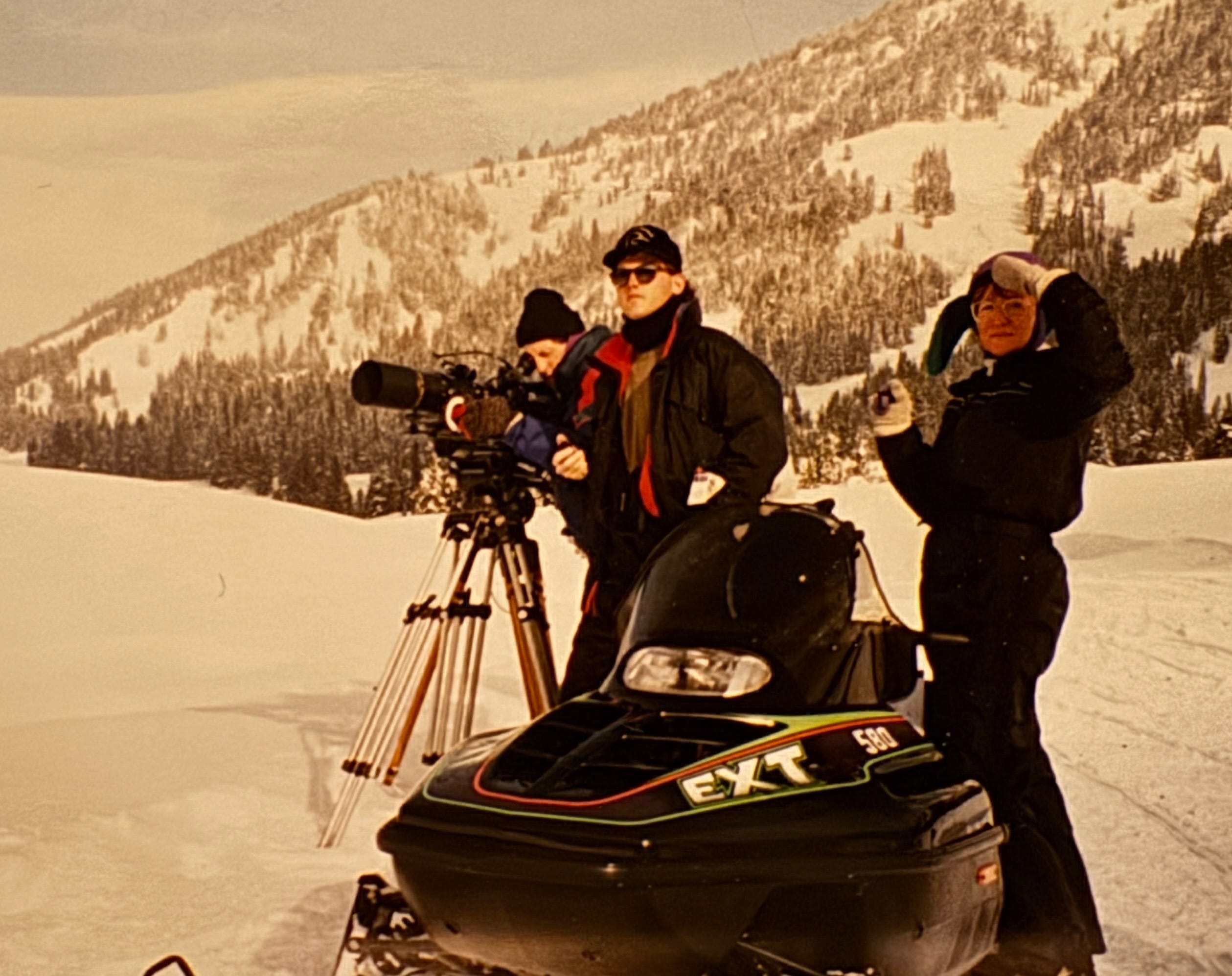
Pressure exposed people quickly in that business. Some collapsed. Some disappeared. Some blamed everybody else. Others simply kept moving.
I learned early that crews respected competence far more than personality. If you solved problems calmly and kept productions moving, people trusted you. If you panicked or wasted time, they remembered that too.
Those lessons stayed with me.
After Iron Eagle III, I agreed to help produce The Great Shark Hunt during the early rise of Discovery Channel’s Shark Week years, when the network was beginning to realize just how massive shark programming and underwater adventure storytelling could become. Opportunities kept surfacing after that. Productions grew larger. Responsibilities increased. My cell phone bills eventually climbed over a thousand dollars a month once I moved into major television commercial productions because productions never stopped moving and somebody always needed something solved immediately.
Around that same time, the controller on Iron Eagle III approached me about an opportunity to work on A River Runs Through It. He knew I was an outdoorsman and a fly fisherman and thought I would fit naturally into that production world.
Under almost any other circumstance, I probably would have taken it.
But I had already committed to The Great Shark Hunt and the underwater production work pulling me deeper into marine filmmaking and television.
So I passed.
Looking back now, that decision probably says a lot about who I already was becoming. I was less interested in drifting toward Hollywood mythology and more interested in real environments, difficult logistics and authentic people operating in the natural world.
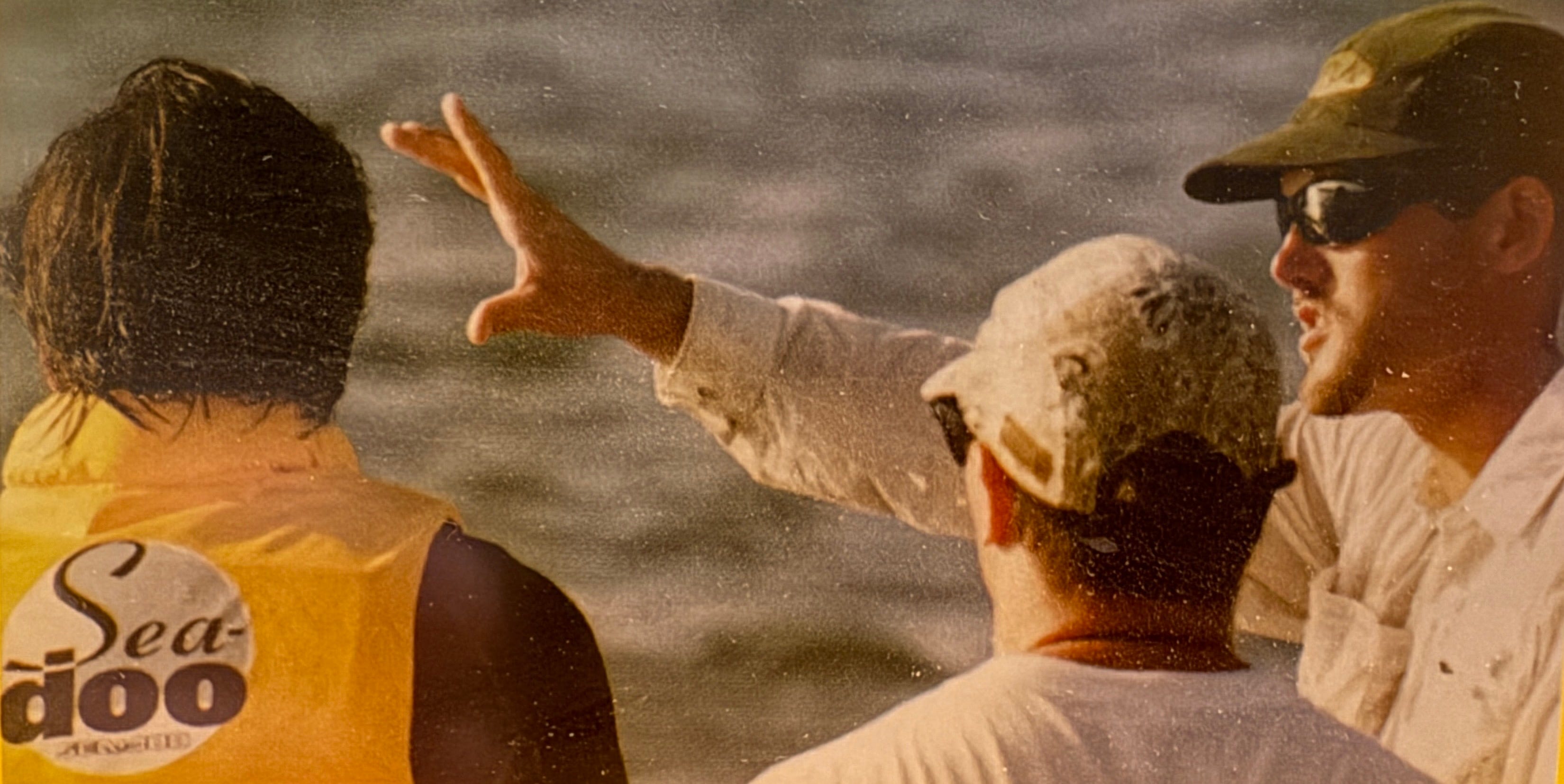
By the time I was twenty-seven, I was directing national television commercials for Sea-Doo, the dominant personal watercraft manufacturer in the world. That was when Dan Mindel entered my life.
Dan was the first director of photography I ever hired as a director.
At the time he was still relatively unknown outside major production circles, a young South African cinematographer who had come to the United States to work around Ridley Scott and Tony Scott’s production world at RSA — Ridley Scott Associates. Even then you could immediately see the discipline in him. Camera movement mattered. Light mattered. Precision mattered. Dan approached cinematography almost like engineering mixed with instinct. Nothing casual. Nothing sloppy.
What I didn’t fully realize at the time was that before stepping onto my production, Dan had just come off shooting G.I. Jane with Demi Moore. Long before Star Trek, Mission Impossible and Star Wars, he was simply another intensely focused cinematographer trying to make images feel larger than the budgets allowed.
And suddenly I found myself no longer observing from behind the curtain.
I was the one responsible.
When we finally wrapped the production, I remember asking Dan whether he thought I could really direct at a high level in this business. By then he had already worked around major directors and large productions. He had seen enough incompetence in the industry to recognize who actually understood how to lead a crew and move a production.
Dan looked at me and told me I was ready for the big time.
Coming from him, that meant something.
Not because I needed validation, but because real craftsmen recognize competence in other people. Dan wasn’t the type to hand out compliments casually. He understood the pressure, the logistics, the personalities and the weight sitting behind every decision once larger budgets and bigger crews entered the picture.
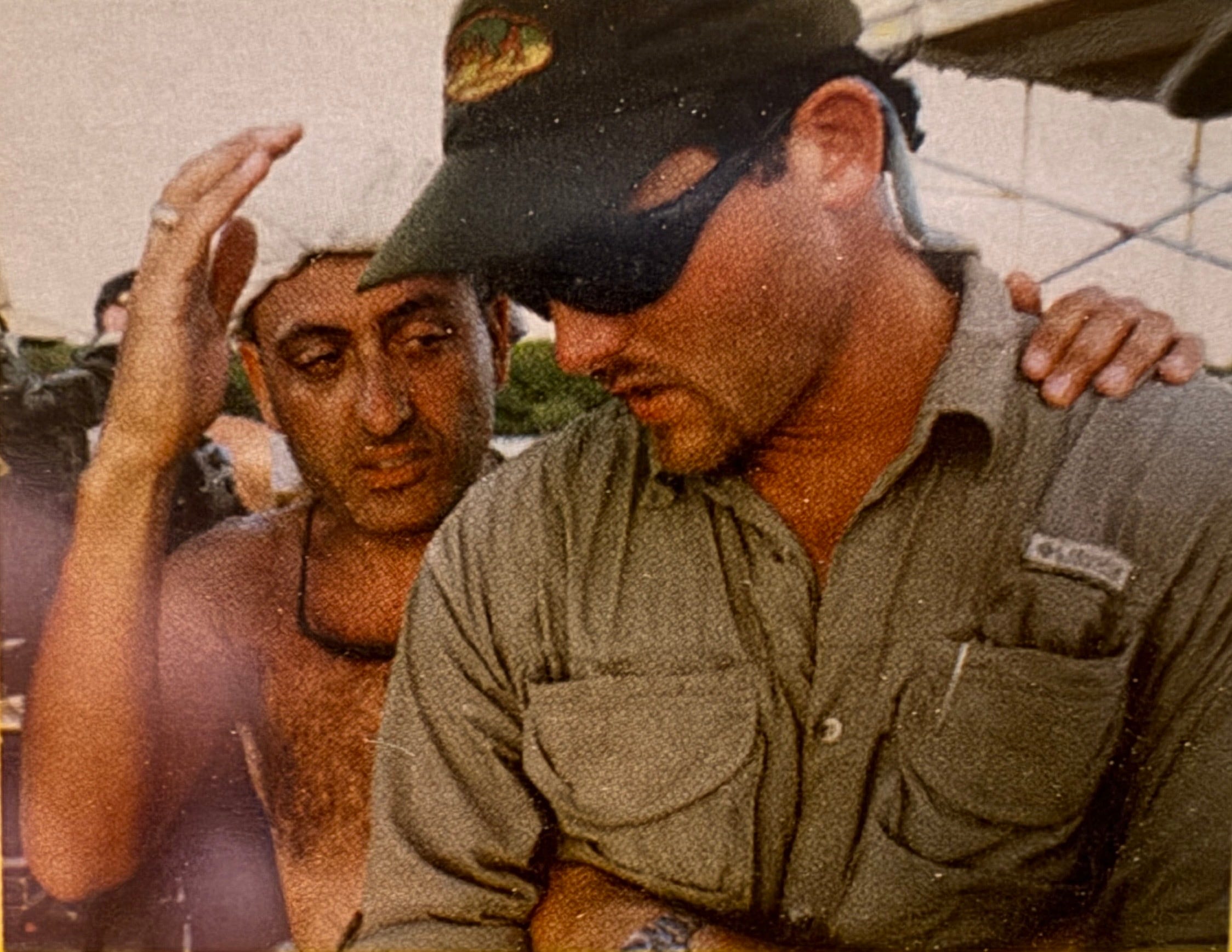
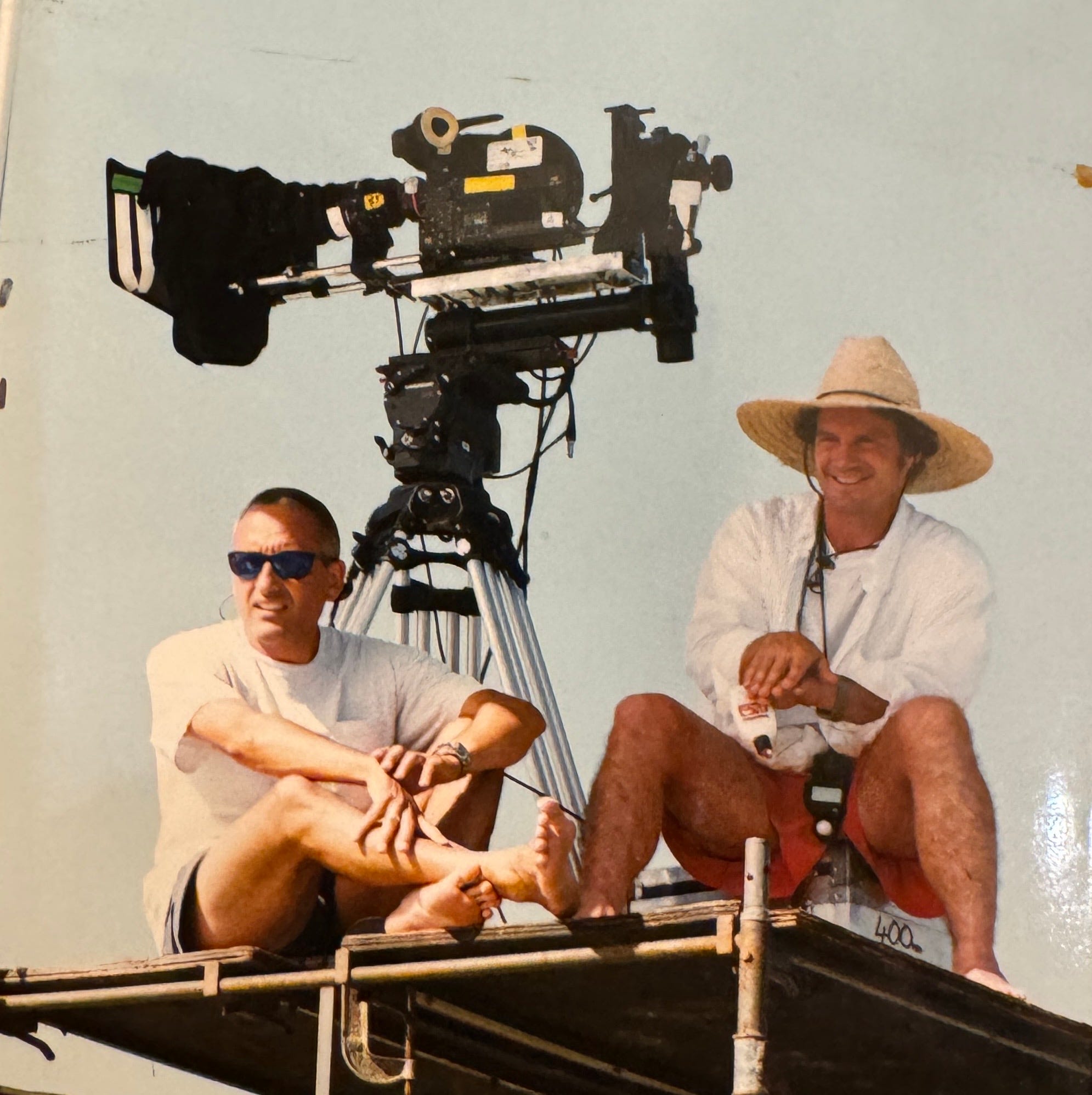
The film business had become very real by then.
The productions had become larger by then. Bigger crews. Bigger expectations. More money burning every hour the set stood still.
Responsible for budgets, crews, clients, locations, weather, schedules and pressure. But strangely enough, the pressure never frightened me the way it seemed to frighten other people. Maybe growing up around newspapermen, sportsmen and hard-traveling outdoor writers had prepared me for it. My father’s world had always revolved around competence under pressure. You either solved problems or you didn’t. Excuses meant very little.
The film business reinforced that lesson every day.
Somewhere during those years I also realized filmmaking itself was teaching me something much larger than camera work or production management. The camera forces you to study people closely. Pressure reveals character. Ego. Fear. Insecurity. Manipulation. Truth. Difficult productions expose human nature quickly, and so do institutions.
At the time I thought I was simply learning how to make films.
What I was really learning was how to observe the world honestly.
The camera was simply the tool.
And looking back now, I sometimes think that kid driving south with nine hundred dollars in his pocket probably understood more than he realized.
###